 listicle
Thought-Provoking Sci-Fi About Technology and the Human Mind
Quick Summary
The most thought-provoking sci-fi about technology treats inventions as infrastructure with owners, prices and political consequences rather than as magic. It uses neural implants, artificial intelligence and edited memory to ask who benefits, who consents and what is left of privacy, intimacy and identity. The best of it leaves you with a question rather than a moral.
- The Girl Who Knew My Mind, by Esteban Lopez, is set in London and Glasgow in 2046.
- Sort AI fiction by whether it asks if a machine can think, who trains it, or what happens when it is right.
- Memory is reconstructive rather than photographic, and recall can alter what is stored.
- If a book fails three or more of the five checklist questions, it is probably a lecture in disguise.
- Separate established science, the author's interpretation and pure speculation as you read.
Table of Contents
- Why Thought-Provoking Sci-Fi About Technology Matters Now
- The Girl Who Knew My Mind: Neural Technology and the Ethics of Intimacy
- Philosophical Sci-Fi Books That Ask What a Mind Is For
- Science Fiction Books About Artificial Intelligence and Its Limits
- Science Fiction Books About Consciousness, Memory and Identity
- Science Fiction Books About Technology and Society, Power and Inequality
- How to Read Sci-Fi About Technology Without Being Lectured
- Find Your Next Thought-Provoking Read
- Frequently Asked Questions
Why Thought-Provoking Sci-Fi About Technology Matters Now
Thought-provoking sci-fi about technology has always done something useful: it lets us rehearse the future before we have to live in it. That is the premise behind this guide from The Girl Who Knew My Mind. Readers who enjoy Blake Crouch, John Marrs and William Gibson keep returning to the same questions. If a machine can read a mind, what is left of privacy? If memory can be edited, who owns the past?
The best sci-fi about technology does not answer those questions. It makes them impossible to ignore.
This list is grouped by theme rather than ranked. Some are classics, and some are recent. Each entry explains what the book is actually asking, so you can pick the one that matches your curiosity. Below, you will find the thread that connects them all: technology is never neutral, and neither are the people who build it.
The Girl Who Knew My Mind: Neural Technology and the Ethics of Intimacy
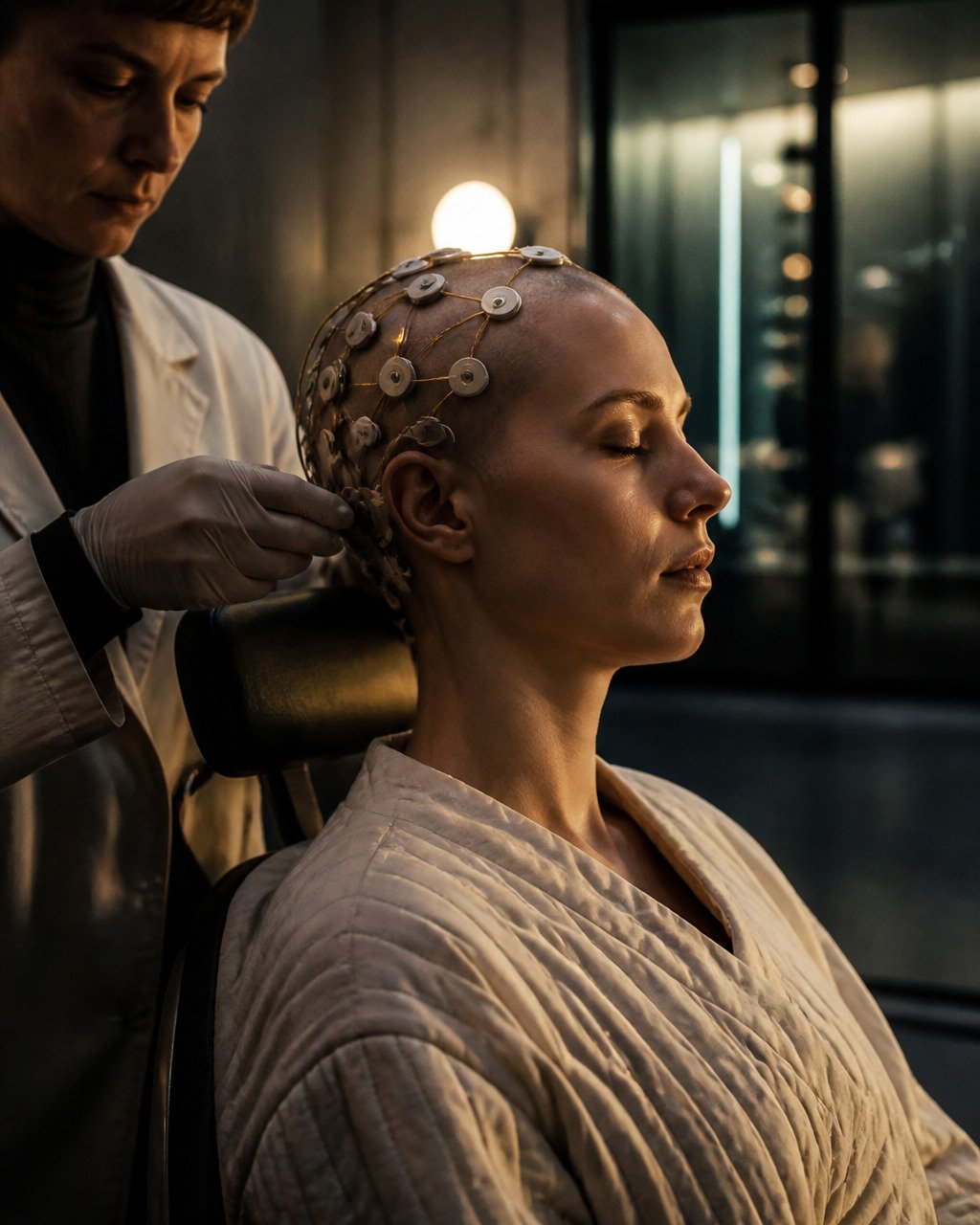
Start with the book this site exists to discuss. The Girl Who Knew My Mind, by Esteban Lopez, is a psychological science-fiction thriller set in London and Glasgow in 2046. Neuroscientist Kathy Adey uncovers a pattern that unsettles her sense of reality and raises hard questions about consent, connection and control.

What makes it relevant here is its restraint. The neural implants are not magic. They are infrastructure, with owners, prices and political consequences. The novel treats intimacy as something that can be engineered, then asks what that does to the people caught inside it.
If the ethics of neural technology interest you, the book's own page is the place to start. Readers who want to go deeper into the moral questions can explore 7 ethical questions neural implants raise in fiction. For the novel itself, see The Girl Who Knew My Mind.
Best for: readers who want a thriller with a conscience and a plausible near-future city. Skip if: you prefer your science fiction set far from Earth.
Philosophical Sci-Fi Books That Ask What a Mind Is For
Philosophical sci-fi books treat consciousness as a problem rather than a backdrop. They ask what a mind is for, and whether a copied or inherited mind counts as the same person.
Science Fiction Books About Artificial Intelligence and Its Limits
Science fiction books about artificial intelligence tend to fall into two camps. One fears the machine. The other fears the company that built it. The more interesting books sit in the second camp, because they treat AI as a product with a supply chain rather than a rogue consciousness with a grudge.
That distinction matters if you want to read rigorously. A useful habit is to sort AI fiction by the question it is really asking:
- Can a machine think? The classic philosophical strand, from Philip K. Dick's Do Androids Dream of Electric Sheep? (1968) onwards. The technology is a test of personhood.
- Who trains the machine, and on what? The contemporary strand, where the interesting pressure comes from data, labour and ownership rather than consciousness.
- What happens when the machine is right and we are not? The strand that overlaps most with psychological thriller, because the threat is epistemic rather than physical.
William Gibson's Neuromancer (1984) is widely discussed as a reference point for these strands.
This is also where the feasibility question earns its keep. Fiction that imagines a system able to model a human mind is best read as a thought experiment rather than a forecast of capability. The Girl Who Knew My Mind treats its neural technology as infrastructure with owners and political consequences rather than a magic mind-reader.
Watch out: it is easy to read a compelling AI novel as a forecast. Treat it as a thought experiment about power, not a prediction about capability.
If you want a focused list of intellectual thrillers on these themes, intellectual sci fi thrillers for 2026 collects seven reads on consciousness, neural tech and autonomy.
| Book | Author | Core Question | Best For |
|---|---|---|---|
| The Girl Who Knew My Mind | Esteban Lopez | Who owns a mind? | Near-future thriller fans |
| Neuromancer | William Gibson | Who constrains the machine? | Cyberpunk readers |
| All Systems Red | Martha Wells | What are a machine's rights? | Fans of dry, humane SF |
| Do Androids Dream of Electric Sheep? | Philip K. Dick | Can a machine be a person? | Philosophical readers |
| Anathem | Neal Stephenson | What is reality made of? | Patient, philosophical readers |
| A Memory Called Empire | Arkady Martine | Is inherited memory identity? | Political space opera fans |
Science Fiction Books About Consciousness, Memory and Identity
Science fiction books about consciousness keep returning to one idea: memory is not a recording. It is a reconstruction, and reconstructions can be tampered with. That claim is not just a plot device. It is one of the better-supported ideas in contemporary neuroscience, and the fiction is most thought-provoking when it takes the science seriously enough to push it somewhere uncomfortable.
The established evidence is worth stating plainly. Memory is reconstructive rather than photographic, and recall can alter what is stored. What remains interpretation is how far those findings generalise to the sense of self, and what they imply for technologies that might read or edit memory. Fiction lives in that gap.
Three books make the gap vivid in different ways.
The Girl Who Knew My Mind belongs here too, and for a specific reason. Its neural implants are treated as infrastructure rather than magic, which means the questions it raises are about consent, ownership and intimacy rather than about whether a mind can be copied. That is a more grounded angle than most memory fiction takes, and it is closer to the ethical questions real neurotechnology would raise if it ever arrived.
What most guides miss is that these books are not really about machines. They are about grief, inheritance and the fear of being replaced by a version of yourself that others prefer. The best of them also resist the temptation to present neural implants as evidence of real-world capability. They are thought experiments, and treating them as forecasts is where readers get into trouble.
For readers who want to keep exploring these ideas between books, the TGWKMM blog on minds, cities and future technology collects essays on consciousness, power and the ethics of sharing private experience.
Science Fiction Books About Technology and Society, Power and Inequality
Science fiction books about technology and society ask the question the others avoid: who benefits?
Every book in this list touches inequality, but some make it the subject.
The pattern is consistent. The technology is rarely the villain. The villain is the institution that owns it, sets its terms and decides who gets access.
This is where speculative fiction earns its keep. It gives readers language for arguments that policy papers often make in drier terms.
How to Read Sci-Fi About Technology Without Being Lectured
The complaint about preachy sci-fi is fair. Some novels stop the story to deliver a seminar. Here is a simple way to tell the difference, and to get more from the books that do it well.
- Does the technology create a dilemma for a specific character, or just illustrate a thesis?
- Are the costs of the technology shown, not just described?
- Do characters disagree with each other, or all agree with the author?
- Does the ending leave you with a question rather than a moral?
- Would the story still work if the technology were removed?
If a book fails three or more of these, it is probably a lecture in disguise. If it passes four, you are in good hands.
The other useful habit is to separate three things as you read: established science, the author's interpretation, and pure speculation. Neural implants in fiction are not evidence of real-world capability. They are thought experiments, and treating them as forecasts is where readers get into trouble.
For readers who want to keep exploring these ideas between books, the TGWKMM blog on minds, cities and future technology collects essays on consciousness, power and the ethics of sharing private experience.
Find Your Next Thought-Provoking Read
The thread running through these books is simple. Technology amplifies whatever the people who own it already want. The best sci-fi about technology makes that visible, then hands the reader a decision to make.
If you want a place to start, start with the one set closest to home. The Girl Who Knew My Mind takes the questions in this list and plants them in a flood-adapted London and Glasgow, where the implants are real, the politics are ugly and the intimacy is complicated.
Readers looking beyond this list can browse mind-bending sci-fi books to read next for titles grouped by memory, consciousness and scientific ambition.
Frequently Asked Questions
What makes sci-fi about technology genuinely thought-provoking rather than just entertaining?
The difference usually comes down to whether the technology changes the characters rather than merely decorating the plot. A thought-provoking novel treats a neural implant, an AI system or a surveillance network as a question about power, consent or identity, not just a gadget. The best examples leave you arguing with yourself about what you would have done. Look for books where the technology creates a genuine dilemma and where the author resists handing you a tidy moral at the end.
Which science fiction books about consciousness and identity should I start with?
The Girl Who Knew My Mind approaches questions of consciousness and identity through neural technology, intimacy and autonomy in a future London and Glasgow. Start with whichever premise unsettles you most, then read the others against it.
Does science fiction actually influence real technology?
It can shape the vocabulary and ambitions of people who build things, and it has a long record of imagining interfaces and devices before they existed. That influence is often overstated, though. Fiction is better understood as a way of rehearsing consequences than as a roadmap. Neural implants in novels, including The Girl Who Knew My Mind, are imaginative premises, not evidence of what current technology can do. Treat the fiction as a set of questions, and the engineering as a separate, slower conversation.
How does The Girl Who Knew My Mind handle the ethics of neural technology?
The novel centres on neuroscientist Kathy Adey and a pattern she uncovers that challenges her sense of reality and the ethics of human connection. Its public themes include consent, control, memory and personal autonomy, set against an unequal future London and Glasgow. It asks what it means to understand another person when that understanding could be engineered. It is a thriller rather than a policy paper, so expect moral complexity rather than a framework, and expect no easy answers.
Are philosophical sci-fi books a good entry point if I usually read thrillers?
Yes, especially the strand that keeps a plot moving while it thinks. Blake Crouch, John Marrs and William Gibson are often read alongside this kind of speculative thriller. The trick is to follow the question you find most interesting rather than the label on the spine.
The challenge is not finding sci-fi about technology. It is finding books that trust you to think. The Girl Who Knew My Mind does that, with a near-future setting, a neuroscientist at its centre and a plot built on consent, control and the value of a mind. Find the book and decide for yourself what a mind is worth.